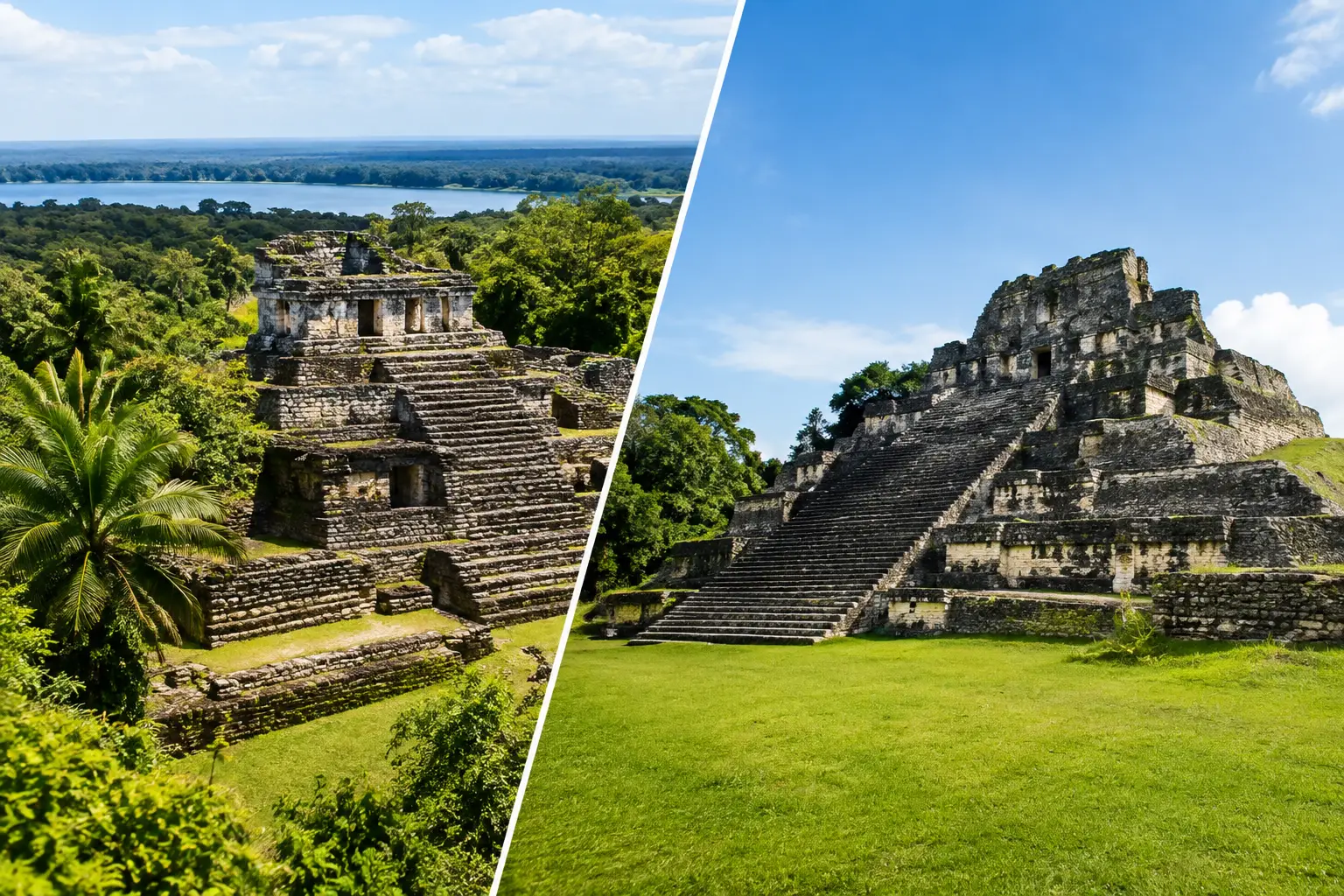
A boat gliding past riverbank birds before a jungle temple appears in the distance feels very different from crossing a hand-cranked ferry to stand beneath one of Belize’s most recognizable Maya pyramids. That is the real choice behind Lamanai versus Xunantunich tours. Both sites deliver extraordinary Maya history, dramatic ruins, and a rewarding guided day in Belize, but the experience, scenery, and travel rhythm are distinctly their own.
For travelers who want more than a quick photo stop, choosing the right ruin can shape the feel of an entire Belize vacation. Lamanai is an immersive river-and-rainforest adventure. Xunantunich is a striking, accessible archaeological experience near San Ignacio, known for sweeping views and impressive architecture. The best choice depends on where you are staying, who is traveling with you, and what kind of memories you want to bring home.
Lamanai versus Xunantunich tours at a glance
Lamanai sits deep in northern Belize near the New River Lagoon. Reaching it is part of the attraction: most visits include a scenic boat ride along the New River, where guides may point out crocodiles, iguanas, bats, and tropical birdlife before the ancient city comes into view. The site is surrounded by thick jungle, giving it a sense of discovery that many travelers picture when they imagine the ancient Maya world.
Xunantunich, located in western Belize near San Ignacio, feels more open and monumental. Visitors cross the Mopan River on a small hand-cranked ferry, then travel uphill to the site. Its centerpiece is El Castillo, a towering temple with detailed stucco friezes and commanding views across the countryside toward Guatemala on clear days.
In simple terms, choose Lamanai for the journey, wildlife, and jungle atmosphere. Choose Xunantunich for dramatic temple views, easy access from the Cayo District, and a visit that pairs naturally with western Belize adventures.
Why choose a Lamanai tour?
A Lamanai tour is ideal for travelers who want the transportation to feel as memorable as the destination. The river journey is not just a transfer between points. It is a chance to experience Belize’s living landscape before stepping into a city that was occupied for more than two millennia.
Once on site, Lamanai reveals broad plazas, forest-shaded trails, and several major temples. The High Temple rises above the canopy, while the Mask Temple is known for its remarkable carved stone faces. The scale of the ruins feels especially powerful because the jungle remains so close. You may hear howler monkeys in the trees or spot colorful birds as your guide explains the history, spiritual life, and daily world of the ancient Maya.
The experience is bigger than the ruins
Lamanai is often the better fit for visitors based in Belize City, the Belize District, or northern Belize who want a full, varied day. It combines archaeology, wildlife watching, a boat adventure, and local storytelling in one outing. Families often enjoy the changing pace, especially when younger travelers are more engaged by boats and animals than by ruins alone.
There are trade-offs. Lamanai generally requires more transportation coordination than Xunantunich, and the day can be longer depending on your pickup location. The terrain is natural and uneven in places, so comfortable closed-toe shoes, sun protection, water, and a willingness to walk are essential. Temple access and climbing conditions can also change, so a knowledgeable guide is valuable for setting expectations before you arrive.
Choose Lamanai if you want a true Belize expedition
Lamanai is especially rewarding for couples, small groups, and culturally curious travelers who do not want their Maya-site visit to feel rushed or predictable. If a river ride through wildlife habitat sounds like part of the dream, Lamanai delivers an experience that is difficult to duplicate elsewhere in Belize.
Why choose a Xunantunich tour?
Xunantunich is one of Belize’s most photographed Maya sites for good reason. El Castillo rises prominently over the complex, and its restored structure makes the city’s scale easy to appreciate even for first-time ruin visitors. The site has an impressive visual impact without requiring a long jungle trek to reach the main plazas.
The ferry crossing adds a distinctive Belize touch before the archaeological visit begins. From there, a guided walk brings the history into focus: royal life, ceremonial architecture, trade, astronomy, and the cultural achievements of the Maya. The decorative friezes on El Castillo are a highlight, with figures and symbols that reward a guide’s interpretation.
A natural fit for San Ignacio stays
Xunantunich is particularly convenient for travelers staying in San Ignacio, near the Guatemala border, or elsewhere in the Cayo District. It can fit beautifully into an itinerary that includes cave exploration, rainforest lodges, chocolate experiences, horseback riding, or other western Belize adventures.
For visitors with limited time, Xunantunich may feel more efficient than Lamanai. You still get a meaningful Maya experience, excellent photographs, and a sense of place, but with less emphasis on the transit adventure. That can be a major advantage for families with a packed schedule or travelers who prefer to preserve energy for another activity later in their stay.
Xunantunich is not necessarily the better choice for everyone. It is less remote in feel than Lamanai, and the experience is more focused on the archaeological site itself than on wildlife and river travel. If your ideal day is lush, quiet, and layered with nature encounters, Lamanai may have the stronger pull.
Consider your Belize itinerary before deciding
Your hotel location matters. From San Ignacio, Xunantunich is usually the straightforward choice. From Belize City, the coast, or northern areas, Lamanai may be the more natural full-day excursion. Travelers staying on Ambergris Caye, Caye Caulker, Placencia, or in the south should consider transfer time carefully when planning either site.
Your group’s interests matter just as much. A traveler fascinated by birds, river ecosystems, and a remote jungle setting may talk about Lamanai long after the trip ends. Someone who wants a grand temple backdrop, panoramic scenery, and an efficient west-Belize day may prefer Xunantunich.
Weather and comfort should also be part of the conversation. Belize is warm year-round, and both sites involve outdoor walking in sun and humidity. During the rainy season, trails can be muddier and river conditions may vary. A professionally organized tour helps remove the guesswork around timing, transportation, site conditions, and what to bring.
Can you visit both Maya sites?
Absolutely, and travelers with several days in Belize should consider it. Lamanai and Xunantunich do not feel repetitive. One offers a water-and-jungle journey into a remarkably atmospheric ancient city; the other offers a powerful architectural landmark in the heart of Belize’s adventure-rich Cayo region.
Rather than trying to squeeze both into one rushed day, give each site room in your itinerary. Pair Lamanai with time in Belize City, the north, or a mainland arrival. Pair Xunantunich with a San Ignacio stay and nearby caves, waterfalls, or cultural experiences. This approach lets you experience two different sides of Maya Belize without turning vacation time into a race between stops.
Make the choice that matches your travel style
The best ruin tour is not always the one with the tallest temple or the shortest drive. It is the one that fits the kind of day you want to have. If you want wildlife, water, and the feeling of entering a lost city through the rainforest, choose Lamanai. If you want iconic architecture, panoramic views, and a perfect complement to a San Ignacio adventure, choose Xunantunich.
With an experienced local guide handling the details, either choice becomes more than a visit to ancient stones. It becomes a vivid Belize story, shaped by the river, the rainforest, the people, and the remarkable Maya legacy still standing before you.